As home values have risen, a reverse mortgage lets you tap into your equity for tax-free cash while staying in your home. Enjoy financial freedom, cover expenses, and live comfortably — without monthly mortgage payments.
Reverse mortgage programs in Canada have costs similar to traditional mortgages, including appraisal, legal, and administrative fees. They offer competitive interest rates, making them a good option for senior homeowners looking to access their home equity without monthly payments.
You’ve worked hard your entire life, and you deserve a retirement filled with comfort, security, and peace of mind. At Wise Equity, we understand that retirement is about more than just saving—it’s about making smart, informed choices that reflect the years of dedication you’ve put into building your future. That’s why we go beyond traditional retirement planning, helping you optimize your mortgage strategy so you can enjoy your Golden Years.
As retirement nears, your financial priorities shift, and your mortgage plays a crucial role in your overall strategy. Whether you’re aiming to pay off your mortgage, downsize to a more manageable home, or access your home’s equity for additional funds, understanding your mortgage options is key to ensuring financial stability in retirement.
How old is the youngest homeowner on the tittle?
Which provicne do you live?
What city do you live in?
How much is your home worth? It's OK to guess?
A reverse mortgage is a financial product that allows Canadian homeowners aged 55 and older to access the equity in their homes. It’s a loan secured by the value of your property, enabling you to convert up to 55% of your home’s value into tax-free cash while continuing to live in your home. A Reverse Mortgage is specifically designed for older Canadians, making it easier to qualify compared to other lending options.
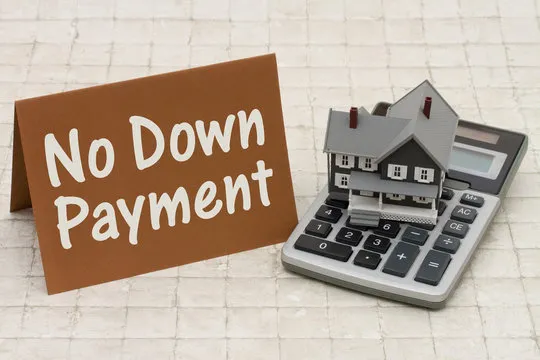
You do not need to make regular mortgage payments. The loan is repaid only when you move, sell your home, or pass away.
Available exclusively to Canadian homeowners aged 55 and over, and the property must be your primary residence.

The amount you can borrow depends on your age, the appraised value of your home, its location, and the type of property.
A reverse mortgage allows Canadian homeowners aged 55 and over to tap into their home equity and access tax-free cash without making regular monthly payments. This means you can convert a portion of your home’s value into funds while staying in your home, without the need to move, sell, or downsize. A reverse mortgage is designed to provide financial flexibility while allowing you to enjoy your home for as long as you wish.

You keep full ownership and title of your home. The loan does not force you to move or sell, regardless of changes in your income or home value.

You or your estate will owe more than the fair market value of your home at the time of its sale, ensuring that your home remains a source of financial security, not burden.

Any increase in your home’s value benefits you directly. You only need to maintain the property and continue to pay taxes and insurance.
The funds from a reverse mortgage can be used in various ways to enhance your financial flexibility:

Supplement your daily living expenses.

Increase your monthly income.
Pay off existing debts.
Purchase an additional property.

Address healthcare expenses.
Improve or update your home.

Take that well-deserved getaway.




Our access to special low interest rates can save you thousands of dollars.
We secure bigger loan approvals than you might achieve on your own.
Save up to $500 on initial setup fees.
Our experienced brokers make the process stress-free.
Discuss your options with no obligation.
Decide if you want a lump sum or periodic payments.
We handle all the paperwork for you.
Use your tax-free, payment-free loan for life.







Qualifying for a reverse mortgage with a bank is largely based on property type, location, and borrower’s age. We lend to borrowers aged 55+ with homes in urban centres in Alberta, British Columbia, and Ontario.
The amount the Bank will lend depends on two factors. One, the borrower’s age. And secondly, the home’s appraised value. Borrowers can now access up to 55% of their home's value. Our eligibility calculator helps calculate how much you might be eligible for.
You can. While it’s encouraged to have a sound financial history, life happens and unforeseen circumstances arise. We get it—that’s why we have options for everyone.
You do. You will not transfer ownership of your property to the bank when receiving a reverse mortgage.
As long as you have met your mortgage obligations, the amount you owe on the due date will not be more than the fair market value.
You can take the mortgage proceeds upfront as a one-time advance (an Initial Advance). Alternatively, you can take a large sum upfront (minimum amount of $25,000) and the remaining funds as Single Advances and/or Recurring Advances scheduled over several years.
You must pay property taxes directly to the municipality.
At the time of application or during the life of the reverse mortgage, we may require a holdback to cover home repairs if deficiencies could affect liveability or have the potential to materially affect the home’s future value. We may also require a holdback if there are tax or condominium arrears.
A POA for property may be used when applying for a reverse mortgage. Your attorney must have the ability to deal with real property. The POA will not be permitted to apply on your behalf simply because you are out of the country.
Yes, we’re here to help. In addition, you will need to meet with a lawyer to receive Independent Legal Advice (ILA) to ensure you understand the product and the legal obligations.
You could use the funds to cover daily expenses, home renovations, medical bills, in-home care, family needs, trips, or help a relative with a down payment, it’s up to you.
We also offer a range of home-financing solutions. You can work with a mortgage broker to find a plan that works for you.
If you continue to meet your mortgage obligations, you should have no concerns about losing your home to the bank.
If you continue to meet your mortgage obligations, you should have no concerns about losing your home to the bank.
lf you have a mortgage, it must be paid off so that the reverse mortgage can be registered in first priority. You can use the proceeds from the initial advance to pay off your existing mortgage, any outstanding debt, or lien registered against the property.
You do. You must repay the value of the mortgage principal, interest, and any fees. If your home increases in value, the gains are yours to keep.
A reverse mortgage with Equitable Bank is available in Alberta, British Columbia, Ontario, and Quebec.
At Wise Equity, we offer reverse mortgages on detached, semi-detached, townhomes, and condos.
Yes, you can. We recognize needs change and our product is designed for that. That’s why we offer flexible options to repay a portion of principal and interest. If you choose to repay the entire balance, there may be a prepayment charge.
You can. Although no regular payments are required until the reverse mortgage becomes due, you have the benefit of prepayment privileges. This allows you to prepay your principal or interest without being subject to a prepayment charge (which can be calculated here). Of course, certain conditions must be met.
Interest payment - Prepay any of your interest outstanding once per calendar month.
Principal payment - Prepay up to 10% of your principal once per 12-month period (starting from your initial advance).
After 5 years - Prepay in excess of 10% of your principal or the entire outstanding balance within 30 days of an interest rate reset date.
After 10 years - Prepay in excess of 10% of your principal or the entire outstanding balance at any time
1Subject to certain conditions
Note:
Any payments received will be applied first to fees and charges, then to interest before being applied to principal.
If you exceed your prepayment privilege, you will be subject to a prepayment charge and applicable fees.
The value of the reverse mortgage must be equal to or greater than the value of any loan secured against the property.
For example, a borrower who qualifies for 40% on a $500,000 home could access $200,000, provided any loans they have secured by the home are less than $200,000.
Yes, you must be at least 55 years old to qualify for a reverse mortgage with Equitable Bank.
However you like. Many Canadians use their reverse mortgage funds to repay existing loans or mortgages, help family members, purchase a new property, or simply to lead a more comfortable life.
Equitable Bank charges a one-time set-up fee of $995. Much like a regular mortgage, there are additional appraisal and Independent Legal Advice fees that come with closing a reverse mortgage.
To reduce interest accumulation, you can limit the amount of your initial advance and take out additional funds only as needed. There’s also the option of paying down interest monthly, without a prepayment charge.
Because no payments are required until the mortgage is due, reverse mortgage rates tend to be higher than standard mortgages. We offer a range of fixed and adjustable interest rates so you can choose the interest rate that works best for you.
There is a setup fee of $995.00, which will be deducted from the initial advance.
Since the Equitable Bank Reverse Mortgage is meant for long-term lending with no quantified term, the due date of the mortgage is established on the occurrence of the earliest of any of these events:
Subject to certain conditions.
Technically, you can't "outlive" a reverse mortgage.
As long as you meet your mortgage obligations, like paying property taxes and home insurance, the amount you owe on the due date will never be more than the fair market value.
If both spouses are registered as joint tenants, the surviving spouse can continue to be a borrower and is entitled to all the benefits a reverse mortgage has to offer.
The appraised value of your home must be at least $250,000.
At any time, the remaining equity on your home will depend on the difference between the home’s current value and the amount owing on the reverse mortgage. Learn more.
Provided you have met your mortgage obligations, the amount you owe to Equitable Bank on the due date will not exceed the fair market value.
Fair market value is the amount that would be paid on the open market, on the applicable date, to buy the property, assuming there are no legal claims against the property. This value would be established by a certified home appraiser.
The Proactive Downsizing Strategy is a financial approach that uses a reverse mortgage to facilitate a smoother transition to a smaller home. Here’s how it works:
You take out a reverse mortgage on your current home to access its equity. This provides you with tax-free funds that can be used to pay off existing mortgages or cover other expenses.
Use the funds from the reverse mortgage to help purchase a smaller, more manageable home. This can lower your living costs and reduce the stress of maintaining a larger property.
By downsizing, you can free up cash that might otherwise be tied up in a larger home. This cash can be invested or used to enhance your lifestyle.
Moving to a smaller home can simplify your daily life, reduce maintenance needs, and potentially lower property taxes and utility costs.
This strategy helps you transition to a more manageable home while leveraging the value of your current property to maintain financial flexibility and security.
The Gift/Generational Wealth Strategy aims to transfer wealth to future generations, ensuring that family assets are built and preserved over time. This strategy includes methods such as gifting assets, setting up trusts, and comprehensive estate planning.
A reverse mortgage can be a powerful tool in this strategy. By leveraging the equity in your home, you can access funds to make significant gifts or fund trusts for your heirs. This approach allows you to maintain your lifestyle while still providing for future generations.
Provide substantial financial gifts to children or grandchildren.
Set up trusts to manage and protect assets for future beneficiaries.
Enhance your estate plan with additional liquidity.
The Second Home Strategy involves acquiring an additional property in addition to your primary residence. This could be for various purposes, such as:
Generating rental income or benefiting from property value appreciation.
Providing a space for extended family or future generations.
Having a personal getaway that you can use whenever you wish.
Incorporating a reverse mortgage into this strategy can offer additional advantages. By utilizing a reverse mortgage, you can unlock the equity in your primary home to fund the purchase of the second property. This allows you to invest in real estate without needing to make regular payments, freeing up your income for other uses.
The Corporate Profit Liquidation Strategy is designed to efficiently manage and utilize surplus profits within a corporation. This strategy involves converting retained earnings into accessible capital, which can then be reinvested or used for various business purposes.
Use a reverse mortgage to tap into your home’s equity, freeing up funds without affecting your business’s liquidity.
The funds from the reverse mortgage can be used for business investments, paying down debt, or covering expenses, while keeping your business’s cash flow intact.
With no immediate repayment required, this strategy allows you to manage corporate profits effectively and avoid immediate tax implications.
Maintain your business’s cash flow while accessing home equity.
Use the funds for various business or personal needs.
Manage surplus profits without immediate tax consequences.
The RRSP liquidation strategy helps manage the tax implications of withdrawing money from your Registered Retirement Savings Plan (RRSP). Typically, withdrawals from these accounts are taxed at your marginal rate, and if you pass away without a spouse, the entire value of your RRSP is taxed at the highest rate.
The interest paid on the investment loan used for this strategy is tax-deductible, boosting your after-tax returns.
Withdrawing funds earlier in life, when your tax rate may be lower, can help reduce your tax burden compared to waiting until death, when taxes could be higher.
You borrow money and use your RRSP withdrawals to pay the interest on this loan.
The amount you withdraw from your RRSP is used to cover the loan interest, which allows you to deduct the interest expense and offset the taxable income from the withdrawal.
Use the loan and remaining funds to create a tax-efficient investment portfolio, benefiting from lower tax rates on capital gains and dividends outside your RRSP.